
The New Listening Imperative: Why It’s Time for CX to Move Beyond NPS
By Clare Muscutt, Founder and CEO of Women in CX
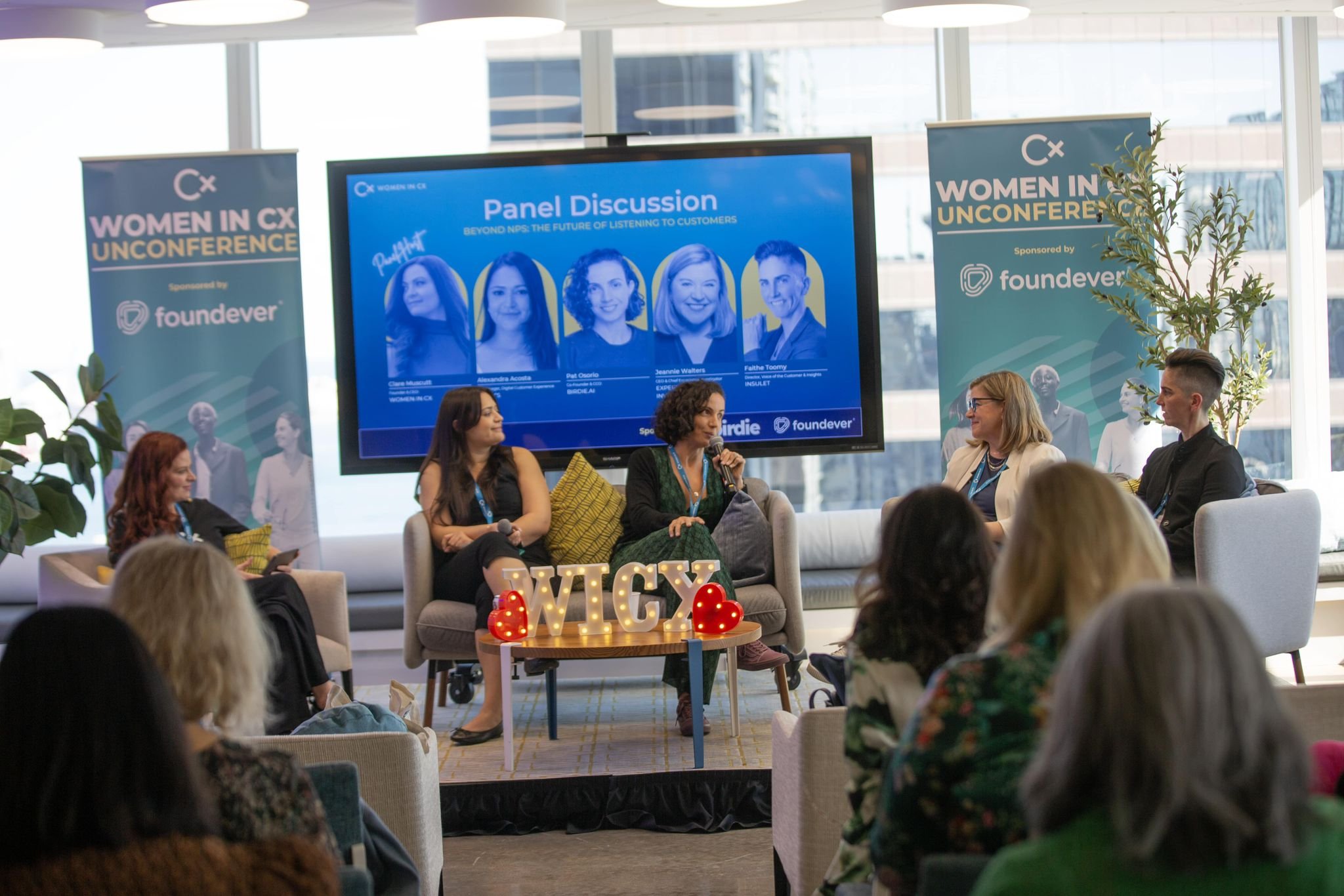
When we gathered in Berlin for the Women in CX Moving Beyond UnConference in September, our EMEA community raised a clear warning: NPS is no longer enough.
Not in a world where customer journeys are nonlinear, experiences are increasingly AI-mediated, and feedback flows from every direction in real time.
When we brought the conversation to Miami for our US edition, the message only amplified. The American perspective added urgency — a sense that organisations may be drowning in data yet still starved of understanding. And behind all the dashboards, charts and weekly reports sits the same universal question:
How can one number possibly represent loyalty, emotion, complexity or truth?
To explore that question through a US lens, I was joined on stage by four brilliant women redefining what it means to listen to customers today:
Alex Acosta, Senior Manager of Digital CX at Macy’s;
Faithe Toomy, Director of Voice of the Customer at Insulet;
Jeannie Walters, CEO of Experience Investigators;
and Pat Osorio, co-founder of Birdie AI.
What followed was a frank, generous, and deeply human conversation, one that built on our Berlin insights but surfaced new realities unique to the US market.
The Problem With NPS: A Simple Number in a Complex World
NPS became the industry’s north star because it promised simplicity – “One number, one truth,” as many leaders were sold – but simplicity, as the panel reminded us, can be seductive and dangerously reductive. In many US companies CX has been reduced to a score and the pursuit of improving it.
Faithe put it plainly:
“NPS tells you the what, but it never tells you the why.”
And in some industries, she added, it’s not even tied to growth. Customers may be captive rather than loyal.
Alex shared one of the most visceral examples of the blind spots NPS creates. While working at Dick’s Sporting Goods, customers kept reporting a shocking issue: receiving used shoes in their online orders. But the NPS score alone didn’t reveal the story behind it.
It took going into stores, speaking directly with employees, and piecing together operational realities to uncover the truth: well-intentioned fulfilment teams were inadvertently re-shipping returned items because their performance metrics penalised them more for “missed fill rate” than for delivering a terrible experience.
No survey score could have uncovered that.
As Jeannie reflected:
“We’ve reduced customers to data points for a long time. Not just with AI — with dashboards that don’t say the word customer anywhere.”
The problem isn’t NPS itself; It’s stopping at NPS and mistaking measurement for meaning.
“We’ve reduced customers to data points for a long time. Not just with AI — with dashboards that don’t say the word customer anywhere.”
The Shift to Blended Listening: Context, Connection and Complexity
Across the US and EMEA panels alike, it’s clear that CX is moving into a blended-listening era; one where unstructured data, behavioural signals and conversational intelligence finally take their rightful place alongside surveys.
Faithe described the power of connecting voice, sentiment, site analytics, and digital behaviour:
“Customers tell us our account creation process is awful. But now we can actually see how long it takes, where they get stuck, and what they feel in the process.”
Alex built on that with a simple framework: behavioural, operational and experiential data woven into a single narrative.
“You can’t just give leaders dashboards. You need to tell the story. What happened, why it happened, and why it matters.”
And Pat, who built her company because she was ‘tired of being ignored as a customer’, offered a candid challenge to the industry:
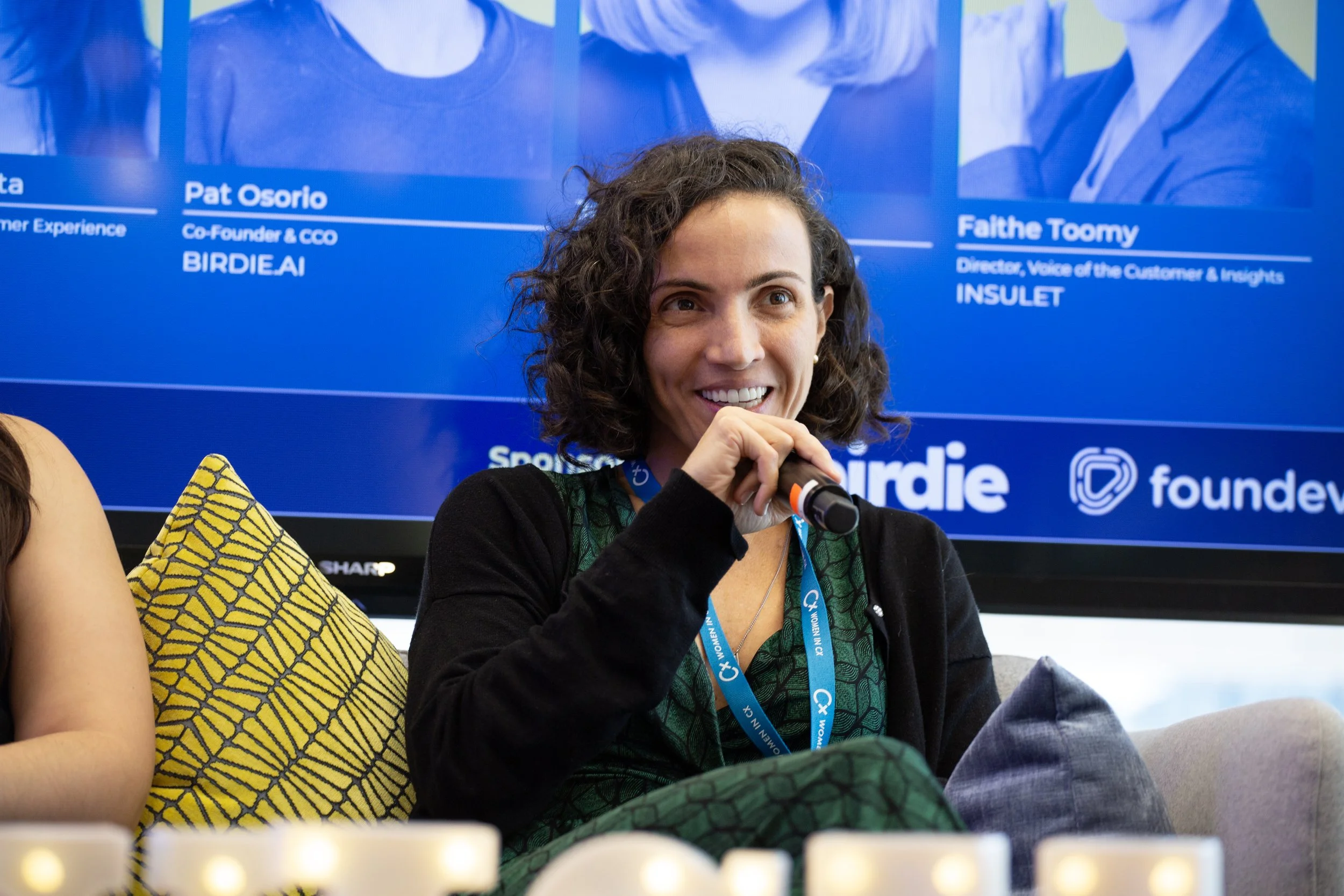
“I wasn’t against NPS. I was against reducing experience to NPS. Customers are sharing their story everywhere. Reviews, calls, chat, social. We just weren’t listening.”
Her work now focuses on using AI to connect all those signals, revealing patterns that manual processes will never surface.
But Pat also issued a caution:
“AI is an enabler — not the answer. If you scatter AI across five tools that don’t talk to each other, the experience stays broken.”
Technology can scale listening, but only humans can interpret meaning.
The Future of Listening Is Human: Emotion, Empathy and Ethical Guardrails
As AI adoption accelerates, the greatest risk isn’t automation itself, it’s forgetting that customers are people, not datapoints.
Jeannie brought the room to stillness with one reminder:
“Humans don’t change because of spreadsheets. They change because of stories.”
Because the truth is, leaders crumble when they hear a real customer’s voice, teams mobilise when they see a person behind the pain point, and empathy turns insights into action.
Alex echoed this with her favourite mantra:
“Data should go to their head first, then their heart second.”

And Faithe grounded us in the emotional truth of experience:
“People don’t call just to get a replacement. They call because something disrupted their routine, their health, their sense of safety. There’s always an emotion behind the behaviour.”
Human-centred listening means honouring that emotion, not smoothing it away with automation.
And when asked how she would redesign CX measurement from scratch, Pat didn’t name a single metric at all:
“There isn’t one metric. These are the metrics that matter to your business right now. And then there is preventing problems before customers ever feel them.”
Listening needs to become proactive, predictive, personalised, preventative, and deeply human.
Final Thought: The Future of CX Belongs to Those Who Listen Differently
If one truth connected Berlin and Miami, it’s this:
CX is entering a new era, and the leaders who will shape it are those willing to move beyond the simplicity of a score and embrace the complexity of the human story.
NPS gave our industry a starting point, but it cannot give us a future. Not when customer journeys scatter across dozens of touchpoints. Not when AI intermediates more conversations. Not when emotion, context and behaviour matter more than ever.
This isn’t just a shift in methodology, it’s a shift in mindset: from measurement to meaning and from metrics to movement.
And here lies a powerful opportunity:
Women in CX are uniquely positioned to lead this transformation.
Across both UnConferences, across every stage and every story, we saw the leadership qualities the listening revolution requires: empathy, ethics, systemic thinking, emotional intelligence, integrity and immense courage. These are not “soft skills”; they’re the strategic capabilities of the next decade.
The future of CX will not be built by those who chase scores but by those who interpret meaning, connect dots, and elevate the human above the metric.
Because customers don’t care about scores; they care about whether we understood them and acted on their feedback. And the organisations that thrive in the next decade will be led by people who listen with the full complexity of the human experience in mind.
The future of CX is human, and it will be shaped by the leaders who insist on listening differently.
Ready to Move Beyond? Register Your Interest for the 2026 WiCX UnConference Series.
The movement we sparked in Berlin and Miami in 2025 is expanding globally.
In 2026, Women in CX hope to host UnConferences across:
🇬🇧 UK
🌍 EMEA
🇺🇸 USA
🌎 LATAM
If you want to be part of the only CX event designed by women, for women — where the agenda is co-created with our community — this is your moment.
✨ Register your interest today to be the first to access dates, locations, early-bird tickets, and community-led speaking opportunities