
By Clare Muscutt, Founder and CEO of Women in CX
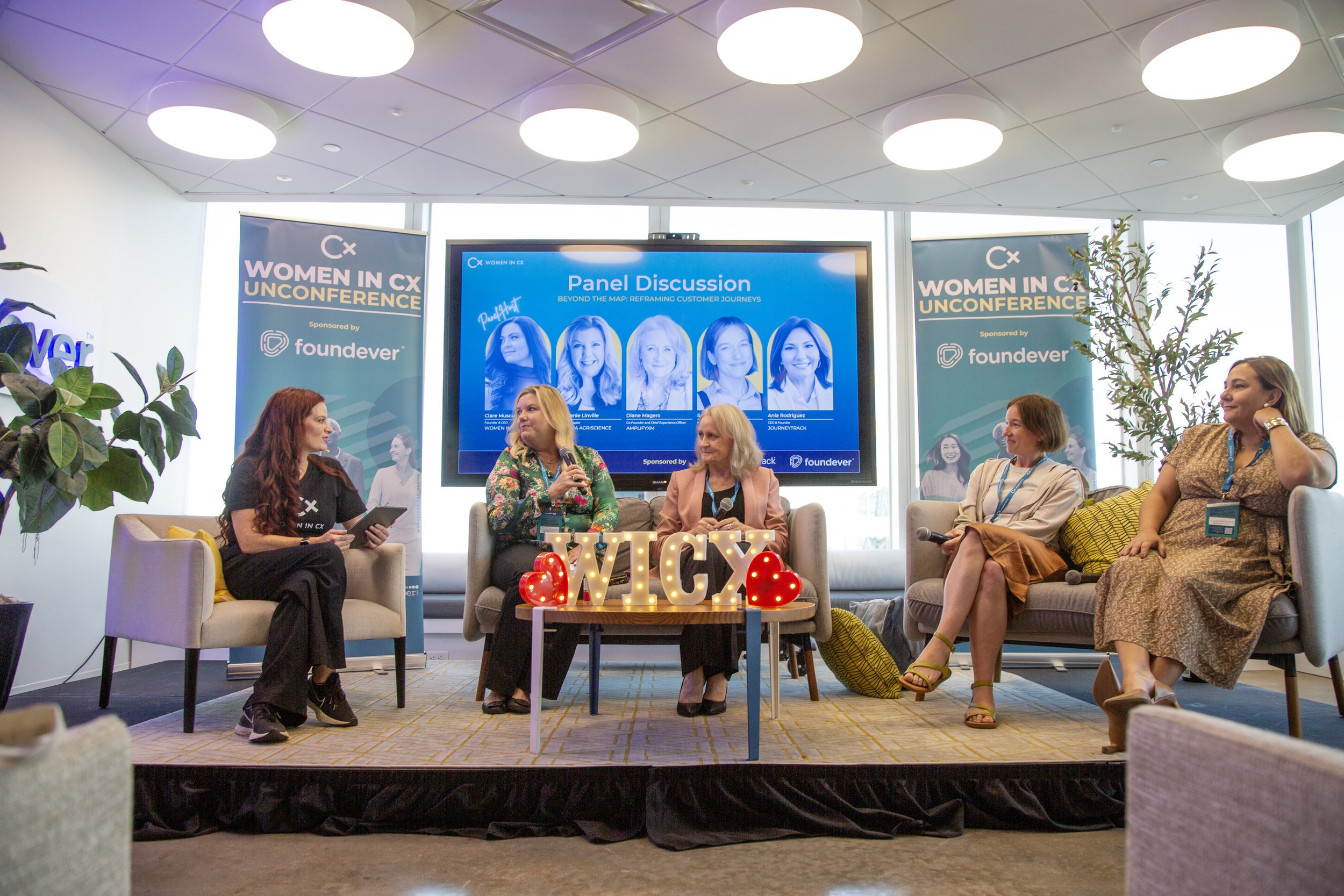
When we gathered in Berlin earlier this year, our conversation about journey management opened the first door. We explored how static journey maps have become corporate wallpaper — admired, referenced, even celebrated — yet disconnected from the real, messy, dynamic journeys customers actually experience.
Coming to Miami, it was clear the conversation wasn’t finished. If Berlin revealed the aspiration, Miami exposed the reality.
Because while European organisations are beginning to experiment with orchestration — real-time, personalised experience flows that adapt moment to moment — much of the U.S. market isn’t there yet. In fact, as our Miami panel made clear, most American organisations are still grappling with the step before orchestration:
Building the fundamental capabilities of journey management and experience design.
This is not a criticism; it’s an honest reflection of where the discipline truly is — and why the shift beyond the map is so urgently needed.
To explore that shift, I was joined by an extraordinary panel of CX, experience design and operations leaders:
Stephanie Linville, Global CX Leader, Corteva Agriscience
Diane Magers, Co-Founder & Chief Experience Officer, Amplify XM
Ania Rodriguez, Founder & CEO, JourneyTrack
Sarah Caminiti, Manager, Customer Support, Tailscale
Together, we dug into why mapping stalls, how management bridges the gap, and why experience design remains the connective tissue that turns ambition into actual change.
When Maps Become Museum Pieces
Journey maps promised clarity, alignment, and empathy. But somewhere along the way, they became static artefacts — snapshots of assumptions rather than engines of improvement.
Diane captured it succinctly:
“People go into mapping like the map is the outcome. It should be a discovery tool. But everyone gets excited in the workshop — then they go back to their day jobs. That’s where it falls apart.”
Stephanie had seen the same pattern:
“Journeys don’t drive change when they’re not tied to real data. Without accountability and ongoing management, the map becomes a piece of art.”
And Ania, having supported enterprise teams for years, explained the operational gap:
“You do research. You make the recommendations. And then what happens? You lose sight of it. Priorities shift. Without a system to track actions, the map has no life.”
There was a moment of shared laughter — the familiar, knowing kind — when Sarah distilled it into an analogy only she could make:
“Journey mapping is The Game of Life — predictable, linear, based on assumptions. Journey management is The Sims — dynamic, emotional, messy. You’re working with real human behaviour, not a storyboard.”
In other words:
> Journey maps reflect what we think happens.
> Journey management reflects what actually happens.
“People go into mapping like the map is the outcome. It should be a discovery tool. But everyone gets excited in the workshop — then they go back to their day jobs. That’s where it falls apart.”
Designing the Organisation, Not Just the Experience
If mapping shows us the customer’s world, service design shows us our own. Diane has been teaching this distinction for decades:
“Journey mapping shows what the experience should be. Experience design shows what the business must do to deliver it. We’re not just redesigning the experience — we’re redesigning the organisation.”
And this is exactly where journey management becomes essential. Mapping reveals the truth, experience design shapes the fix and journey management keeps it alive. It becomes, as Ania described, a “system of record” — a living environment that connects:
Data
Insights
Actions
Ownership
Metrics
And critically… governance
This is where the U.S. currently lags behind Europe.
In Berlin, we heard stories of UK and EMEA teams already experimenting with light-touch orchestration, layering machine learning over journeys to nudge personalised experiences.
Miami brought a different truth:
“Everyone talks about journey orchestration,” Ania said, “but most organisations — especially in the U.S. — aren’t ready. The real next step is governance. Shared tags, shared definitions, shared metrics.”
Orchestration is aspirational, management is foundational, and you can’t have one without the other.
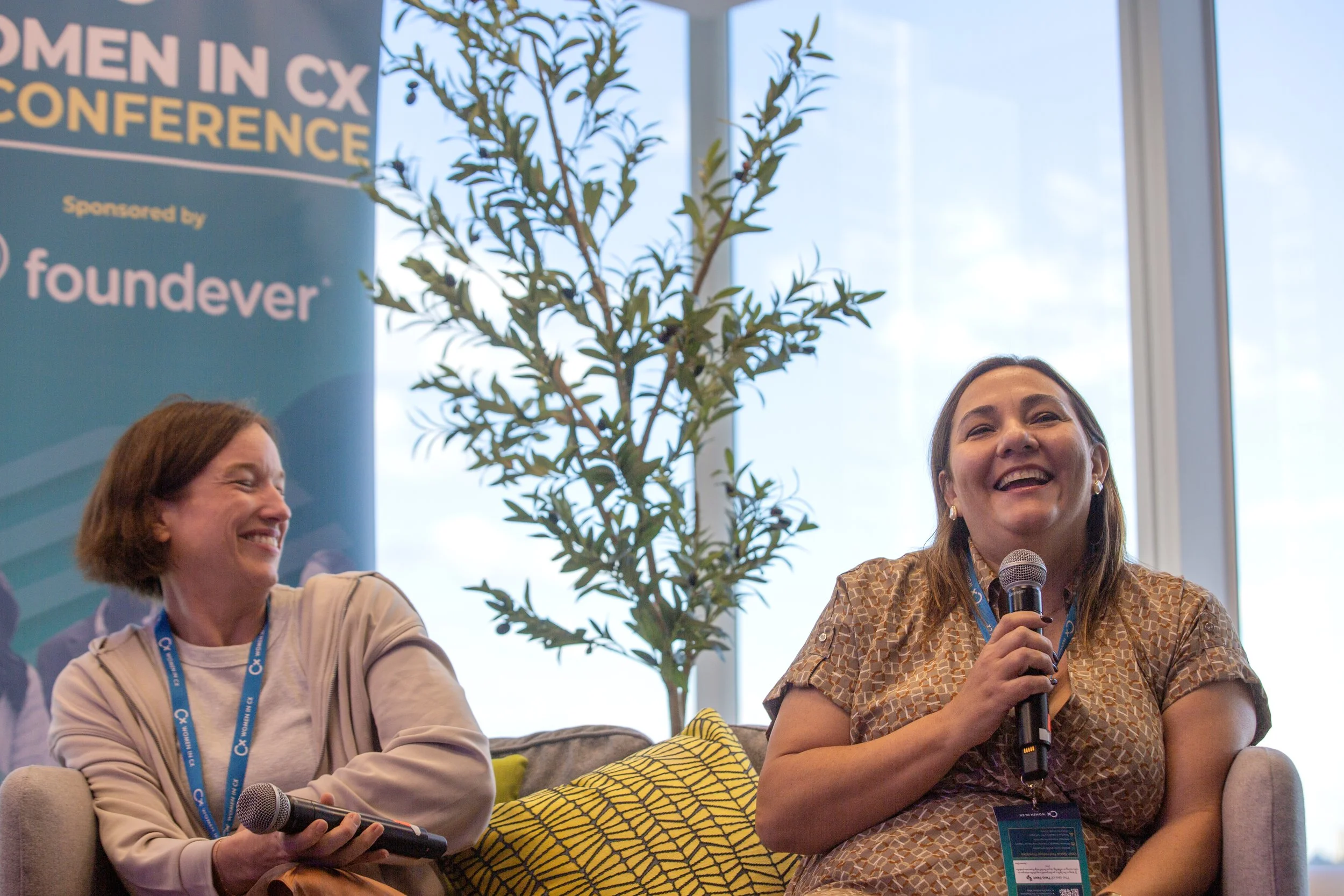
“Everyone talks about journey orchestration, but most organisations — especially in the U.S. — aren’t ready. The real next step is governance. Shared tags, shared definitions, shared metrics.”
– Ania Rodriguez
The Real Future: Governance, Not Glamour
Miami gave us a glimpse of what’s coming.
AI will absolutely transform journey work — not by magically orchestrating experiences in real time (we’re years away from that in the US), but by strengthening the governance that underpins good management.
Ania gave us an early look into what this future might hold:
“Our next big step is AI agents for governance. When you have hundreds of journeys, you need consistent tagging, consistent definitions, and signals when something is out of date or in conflict.”
It’s not the glamorous, hyper-personalised orchestration that vendors like to sell.
But it’s the truth:
Before we can automate experiences, we must standardise how we understand them.
And as Diane reminded us, this isn’t just a technical shift — it’s a human one:
“If the organisation isn’t thinking in systems, it’s going to be incredibly difficult to move along this path.”
Journey management demands new capabilities CX teams haven’t historically been asked to develop: systems thinking, experience design fluency, data governance, cross-functional facilitation — and above all, change management.
The last point struck a deep chord.
Ania offered a rare moment of vulnerability:
“If I could start my career again, I’d specialise in change management. That was the big miss. That’s what CX was lacking.”
Sarah brought us home with the human truth:
“Shared language is the future. When people feel empowered to talk about the journey — and understand the data — that’s when change actually happens.”
Final Reflection: Beyond the Map, Beyond the Myth
Berlin taught us where we want to go.
Miami showed us where many actually are.
And together, these two conversations revealed a truth our industry has avoided for far too long:
The future of CX will not be built on maps; it will be built on experience design and management.
Not static artefacts, not theoretical blueprints, not orchestration promises we’re not ready for, but on the operational, disciplined, deliberate capability to design and manage journeys as living systems.
Because customers don’t think in departments. They don’t move in straight lines. They don’t behave according to our diagrams. They live in nonlinear, emotional, evolving journeys, and the organisations that thrive will be those that learn to live there too.
This is the future women in CX are already shaping — with empathy, systems intelligence, and the courage to design the organisation, not just the experience.
Journey management and experience design aren’t just the “next thing.” They’re the foundation. And the leaders who master both will redefine the future of customer experience.
Across every panel at this UnConference, we saw the leadership traits the future demands:
Empathy.
Systems awareness.
Collaboration.
Design literacy.
Operational intelligence.
And the courage to challenge old models and build new ones.
The future of journey work won’t belong to the teams with the prettiest maps. It will belong to the organisations — and the leaders — who can manage journeys dynamically, collaboratively, and continuously.
The future of CX is systemic, human, and alive.
And it will be shaped by the leaders who dare to move beyond the map.
Ready to Move Beyond? Register Your Interest for the 2026 WiCX UnConference Series.
The movement we sparked in Berlin and Miami in 2025 is expanding globally.
In 2026, Women in CX hope to host UnConferences across:
🇬🇧 UK
🌍 EMEA
🇺🇸 USA
🌎 LATAM
If you want to be part of the only CX event designed by women, for women — where the agenda is co-created with our community — this is your moment.
✨ Register your interest today to be the first to access dates, locations, early-bird tickets, and community-led speaking opportunities.