
What Women in CX Wish They Had Known Earlier
“Customer experience isn’t a department. It isn’t a job title. And it isn’t something a CX team delivers. It’s the outcome of all the micro decisions being made across an organisation every single day.”
Edited by Clare Muscutt, Founder and CEO, Women in CX
When we asked members of the Women in CX Inner Circle what they wished someone had told them earlier about customer experience, very few chose a technical skill. They wrote about how organisations make decisions, how teams work together, the confidence required to influence people and the judgement needed when a clear answer is unavailable.
That pattern reveals a gap between the discipline as it is commonly taught and the job as it is lived. CX practitioners learn to research customers, map journeys, analyse feedback and design improvements. Those methods help us see what customers experience. Progress then depends on understanding the organisation producing it.
A journey map cannot resolve competing priorities. Customer insight cannot act on itself. Technology cannot compensate for teams that withhold information or work towards conflicting targets. The lessons below concern what happens after the methods have revealed the problem: how to trace its cause, bring people with you and change the conditions allowing it to persist.
How customer experience is shaped across an organisation
For Clare Muscutt, Founder and CEO of Women in CX, the most important realisation arrived during more than 20 years in the profession. She had spent much of that time believing her job was to improve the customer experience: understand customers, map their journeys, identify pain points, develop the strategy and persuade the organisation to implement it.
“Customer experience isn't a department. It isn't a job title. And it isn't something a CX team delivers. Customer experience is an outcome. It's the cumulative outcome of thousands of decisions being made across an organisation every single day.” — Clare Muscutt, Founder & CEO, Women in CX
Those decisions include the policies people write, the processes they design, the targets they set, the technology they buy and the work they automate. Many will never be labelled as customer-experience decisions. Their consequences become part of the experience when they reach a human being.
Clare’s conclusion is direct: “CX isn't about owning the experience. It's about creating the organisational conditions for better decisions.” The work involves making customer outcomes visible, connecting insight to the people with the power to act and helping functions understand how their choices affect one another (and the bottom line).
Elena Marcelle, CX & Digital Transformation Strategist at CX as Strategy, reached the same issue from another direction. “I wish someone had told me earlier that not every customer problem is really a CX problem.” A difficult process might originate in a risk decision. Inconsistency across channels may reflect divided ownership. Persistent friction may survive because its consequences remain invisible when priorities are set.
As Elena puts it, “sometimes the journey is simply where an organisational decision becomes visible to the customer.” Fixing the journey without changing the decision can improve the visible touchpoint while leaving its cause intact.
This is also why insight alone rarely produces change. Susanna Baque, Senior Director Global Customer Experience at SCIEX, wishes she had understood earlier that “Customer Experience is as much about influencing people as it is about understanding customers.” Her role evolved from representing the customer to connecting teams, functions and leadership levels. The practical lesson she offers newer practitioners is equally clear: “Empathy will open doors, but influence is what turns insight into action.”
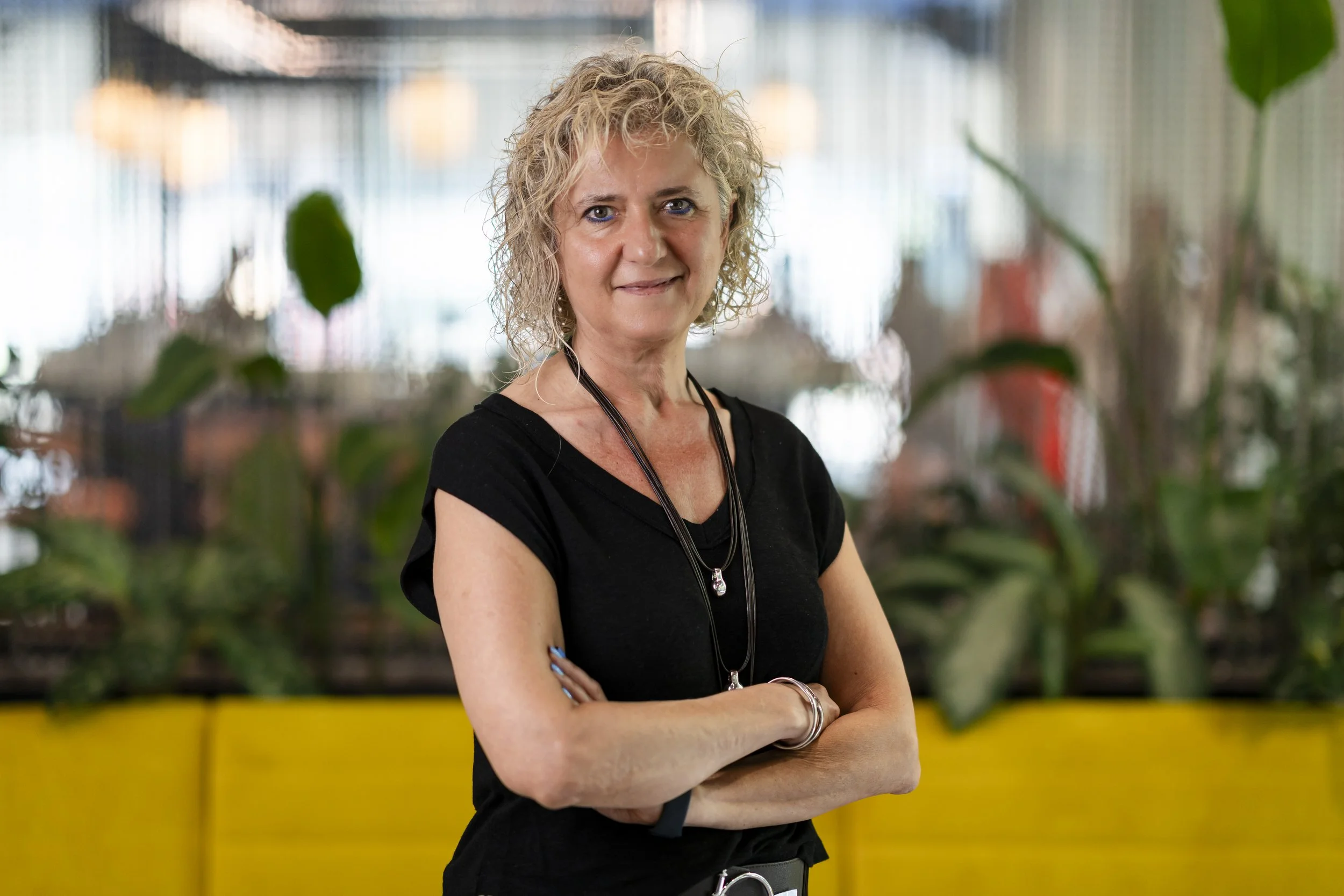
“Empathy will open doors, but influence is what turns insight into action.” — Susanna Baque
Learn the organisation as carefully as the customer
CX roles cross functional boundaries, often without authority over the people or decisions shaping the experience. Understanding the formal process is therefore only a starting point. Practitioners also need to learn how work happens in reality: where information stops, which measures dominate, what each team needs and how decisions move through the business.
Lara Khouri, The CXO Maker at there is no spoon cx, captures the breadth of the field: “CX can look like a lot of different things - marketing, operations, customer service, community management, data science, research, sociology, psychology”. That range can feel overwhelming. Her practical response is to spend time with people across the organisation, understand their work and see how the pieces connect. The organisation chart shows who owns each function. Observation reveals how the customer experience is actually produced.
“Frictionless CX isn't about removing steps for the customer, it's about absorbing the complexity so they never feel it.” — Huda Parkar
Huda Parkar’s point makes internal coordination part of the design. A seamless journey may require several teams to resolve complexity between themselves before it reaches the customer. Strong processes and technology help, but the arrangement remains fragile when those teams do not communicate or trust one another.
Olivia Hogg, Customer Experience Specialist at FCT, recommends a deceptively simple habit: “Just ask why!” The question can expose an assumption, constraint or unintended consequence while there is still time to address it. She learned the cost of asking too late through experience: “It is WAY harder to fix a sinking ship than it is to do routine maintenance checks to ensure things are running smoothly.”
Learning how the organisation works is therefore part of customer understanding. Without it, practitioners can describe the friction accurately and still aim their solution at the wrong place.

“Just ask why! […] It is WAY harder to fix a sinking ship than it is to do routine maintenance checks to ensure things are running smoothly.” — Olivia Hogg
Why employee experience shapes customer experience
Customers encounter an organisation through people who are working within its policies, systems, staffing decisions and performance measures. Several contributors wished they had recognised earlier how directly those working conditions shape the experience customers receive.
“I thought my job was to manage performance. It turns out my job was to build confidence.” — Faye Carlos, Senior Customer Experience Manager, Trademark Global
Faye Carlos began with the expectations traditionally attached to management: deliver what leadership wants to see and what customers expect to receive. Her biggest shift was towards supporting, trusting and empowering the people responsible for delivering it. “The best investment I ever made in customer experience wasn’t in a process or a tool. It was in my people.”
Anne Dawson, Sr. Manager, Employee Development & Training at CallMiner, reinforces that connection from the employee-development side. “If you have unhappy customers, chances are you also have unhappy employees (and vice versa).” A direct relationship between customer-service leadership and employee development allows emerging customer problems to influence training quickly. Partnership with HR also shapes who joins the team and whether employees feel able to challenge an experience that falls below the organisation’s standards.
Kilver Sidhu argues that frontline colleagues should help shape solutions because they understand customer needs through daily contact. “They understand customer needs better than anyone and should be involved in shaping solutions, not simply delivering them.” Their workarounds, repeated questions and moments of hesitation reveal how the system behaves under pressure.
That responsibility includes giving employees enough knowledge and support to be honest. Elsa Tranquillo learned the damage caused by promises made without the information or authority to keep them. Her alternative is simple: “Saying ‘I don’t know, I will check and be back to you’ is more powerful than you think.” The value lies in acknowledging uncertainty, finding the right person and returning when promised. Customers can work with a reliable process; false hope creates another failure.

“The best investment I ever made in customer experience wasn’t in a process or a tool. It was in my people.” — Faye Carlos
Shape decisions before customer friction becomes failiure
Much of the visible work of CX begins after a problem has appeared: a complaint rises, a journey score falls or a service team reports repeated contact. The community’s responses point towards a more useful position upstream, while the decision can still be tested or changed.
“One of the biggest lessons I’ve learned is to test before you transform. When you’re making a significant change, start small, listen carefully and learn in a controlled way before scaling.” — Kilver Sidhu
Testing at a smaller scale makes unintended consequences visible before they become expensive or difficult to reverse. It also brings frontline knowledge and customer response into the work while the solution is still open to change. Efficiency and innovation remain important, Kilver argues, but sustainable commercial performance depends on protecting customer trust as those decisions are made.
The same principle works without a large formal programme. Marta Duchai, Senior Consultant - Customer Experience for SMEs at ErtekelesTUNING, starts with one question: “what does the customer experience before, during and after interacting with the business?” Those three stages can expose where people feel valued, where friction appears and where the business loses opportunities. They also make CX accessible to organisations that still associate it with large teams, platforms and transformation budgets.
“What I think organizations get wrong is missing the fact that CX can be the highest-converting sales and marketing channel they have.” — Silvija Novak, E-commerce Lead, Wiip Technology
Silvija Novak describes the familiar e-commerce arrangement in which marketing navigates, sales drives, and CX becomes the fire department after the crash. That confines valuable customer intelligence to post-purchase service. Customer conversations reveal objections, misleading promises, conversion blockers and the reasons people return. When those insights reach product, sales and marketing, CX can influence who the business acquires as well as whether they stay.
The wider lesson is that CX creates more value when it informs choices before they become customer problems. Waiting for a failure leaves the function proving the cost of a decision it was never invited to shape.
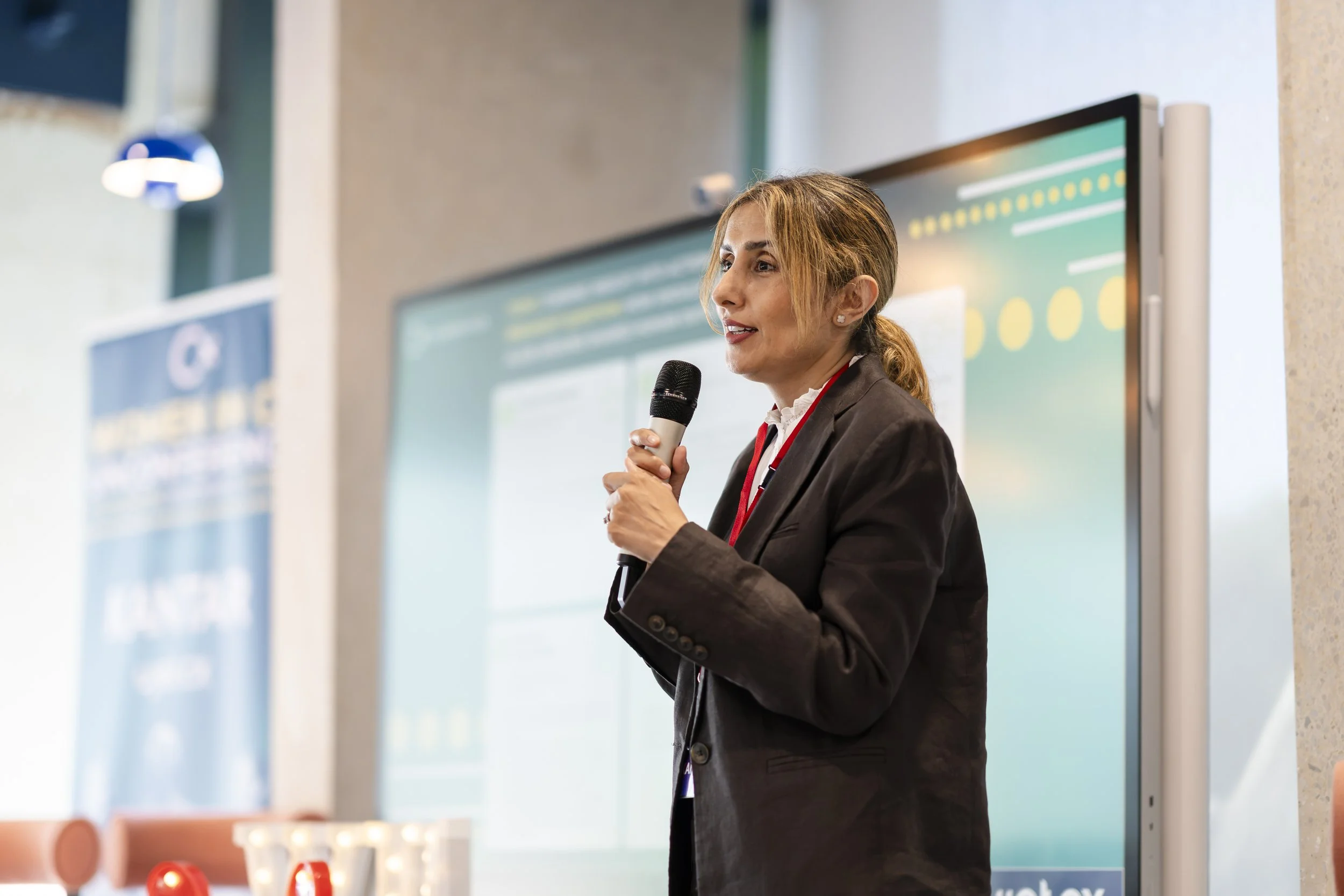
“One of the biggest lessons I’ve learned is to test before you transform. When you’re making a significant change, start small, listen carefully and learn in a controlled way before scaling.” — Kilver Sidhu
Contribute before you feel completely ready
CX covers an unusually broad range of disciplines and organisational problems. New practitioners can mistake that breadth for a requirement to arrive with every answer. The community’s final lesson concerns the confidence to contribute while continuing to learn.
“Early in my career, I often assumed that what I had to say was too obvious or too basic. What I've learned is that what feels like common sense to you may be a completely new insight for someone else.” — Leonora Gouveia, Sr Business Solutions Manager, SAS
Leonora Gouveia’s advice is to remember that “your voice matters”. Each function and individual sees a different part of the experience. An observation that appears basic from one position may be entirely new from another. “So don't be afraid to share your ‘basics’,” she says. Speak, ask questions and make room for other perspectives in return.
Elsa Tranquillo adds that “Your previous experience counts, even if it was related to a different role.” Communication, client management, operational knowledge and time management all transfer into CX. So does the ability to say that you do not yet know, provided you take responsibility for finding out.
Curiosity appears repeatedly across the responses because it allows practitioners to work without pretending to have mastered the whole organisation. Ask why. Spend time with the people doing the work. Test before scaling. Share the observation that seems obvious. These are ways of learning in public while still moving the work forward.
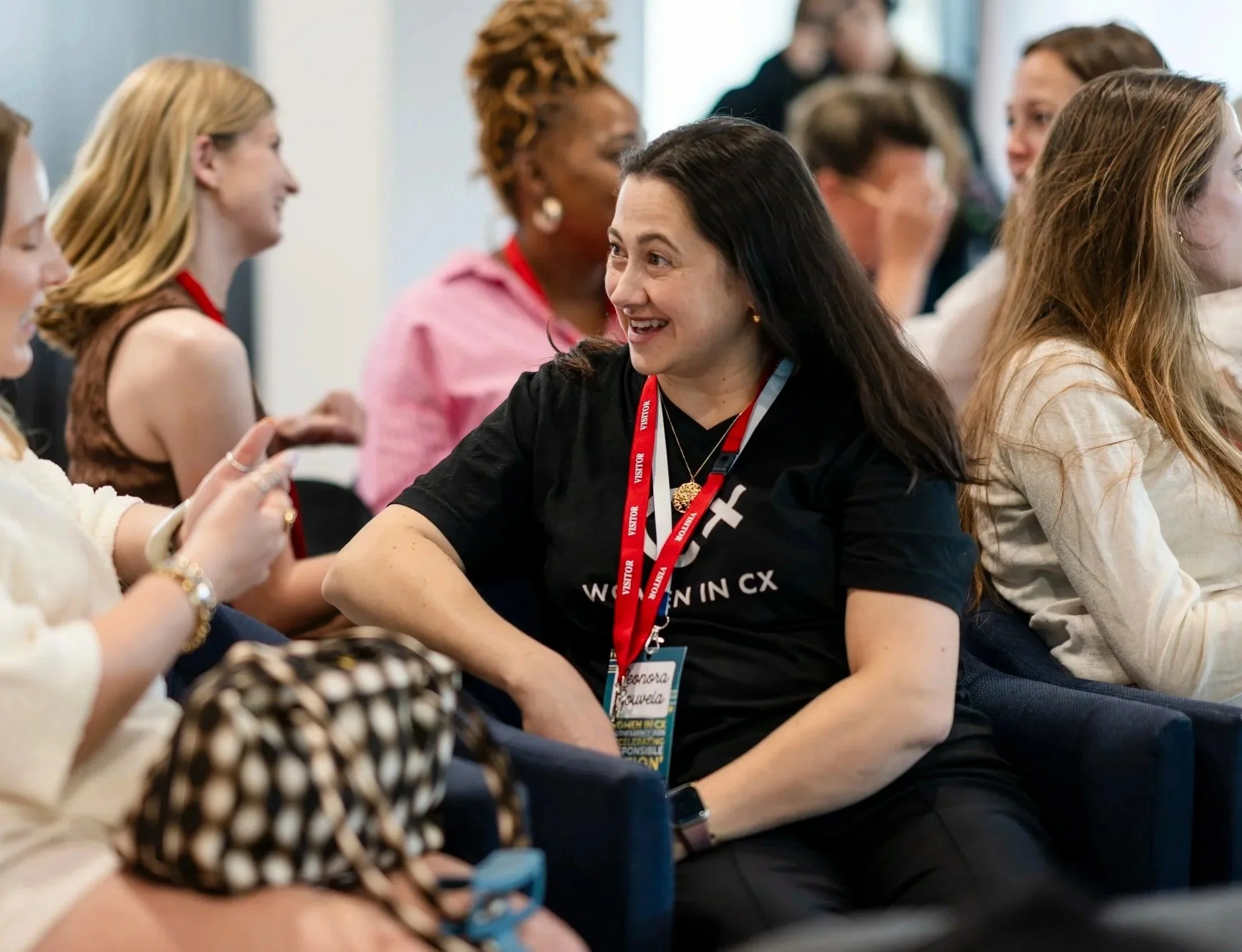
“Early in my career, I often assumed that what I had to say was too obvious or too basic. What I've learned is that what feels like common sense to you may be a completely new insight for someone else.” — Leonora Gouveia
The lessons behind the methods
Journey mapping, customer research, Voice of the Customer programmes and technology remain important. Yet the lessons these women carried forward concern how to operate once those methods reveal something that needs to change.
They learned to trace visible friction back to organisational decisions; understand colleagues as carefully as customers; build confidence on the frontline; involve people before solutions are fixed; connect customer evidence to commercial choices; and speak before certainty arrives. These are organisational capabilities. They determine whether customer understanding changes anything.
Many of these lessons were learned through costly mistakes, slow realisations or years spent working between functions without enough peers who understood the role. The Women in CX Inner Circle turns that private experience into shared knowledge, so women can learn from one another earlier and make better decisions in the work they are doing now.
Continue the conversation: Explore the Women in CX Inner Circle