
There is a moment in a customer insight presentation that can feel like progress. The evidence has landed. Leaders recognise the problem. Around the table, people agree that something needs to change.
By Clare Muscutt, Founder and CEO, Women in CX
There is a moment in a customer insight presentation that can feel like progress. The evidence has landed. Leaders recognise the problem. Around the table, people agree that something needs to change.
Then the meeting ends.
Erika Styles described that moment at our Women in CX US UnConference in Dallas:
“I'm getting the head nods, and everyone is agreeing that this is an urgent problem. We leave the room and it's back to usual, back to everyone focusing on their priorities.”
Many of us have been in that room. We have brought the customer stories, anticipated the objections and made the case. Yet weeks later, the same problem appears in the feedback.
Our 2026 UnConference theme, Accelerating Responsible Action, asks us to examine what happens in that gap. Organisations can now identify customer problems at extraordinary speed. They already know more than they have the capacity to solve. Each new insight enters a business where budgets are committed, teams have targets and other priorities already have powerful advocates.
What does it take for customer understanding to change those decisions?
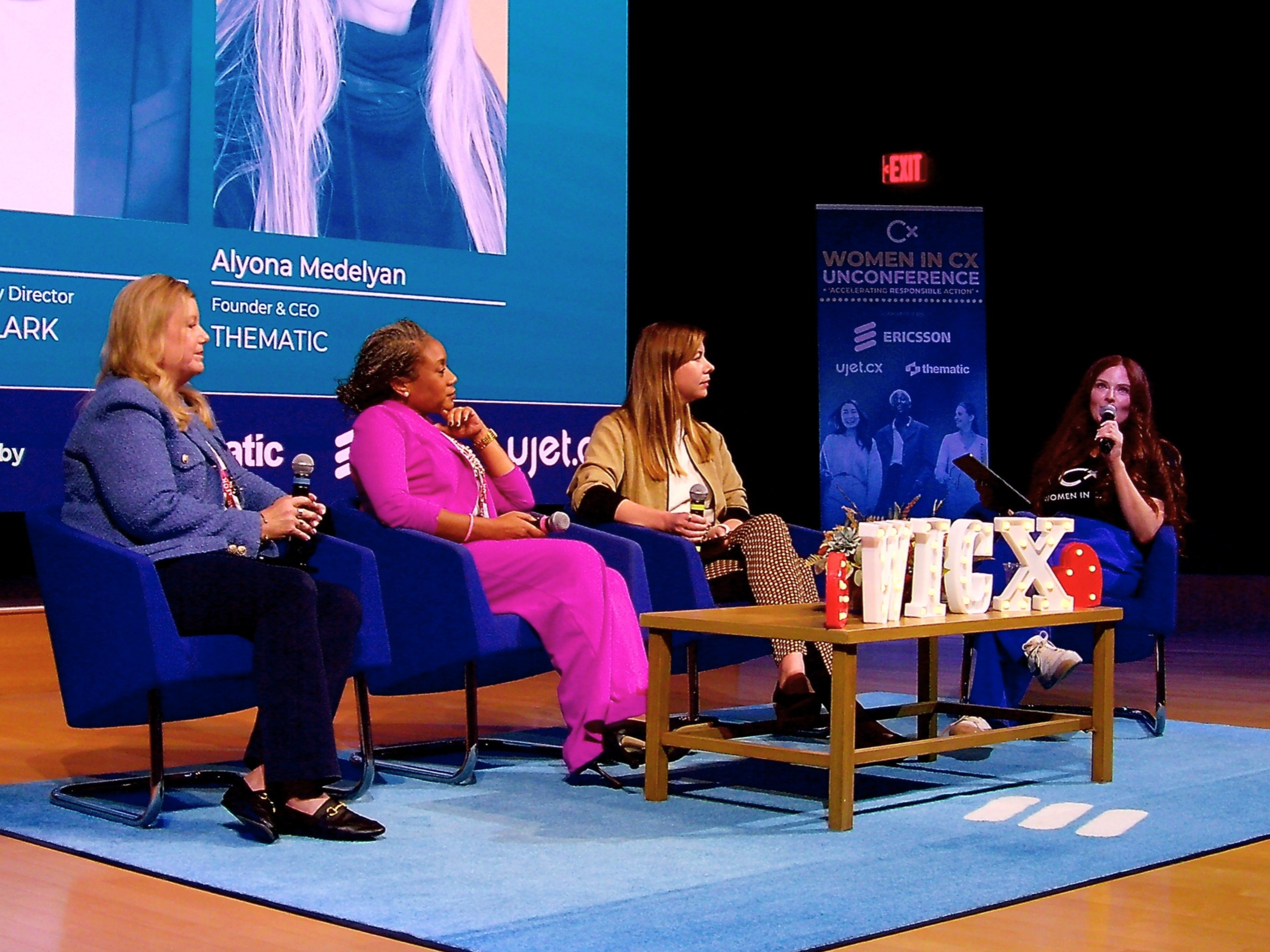
To explore that question, I was joined by Stephanie Linville, Global CX Leader at Corteva Agriscience; Erika Styles, Associate CX Strategy Director at Kimberly-Clark; and Alyona Medelyan, Founder and CEO of Thematic.
Their experiences revealed how much has to happen before a customer problem becomes something the organisation is prepared to own.
Earning Confidence: What Are We Asking Leaders to Believe?
Alyona’s founding story began with a revealing conversation. Her husband, then a senior leader at a music company, would dismiss customer insights as someone’s opinion. He had quantitative evidence from bugs and system reports. What customers said did not carry the same authority.
That distinction will be familiar to anyone who has had to defend customer feedback in a room where other forms of data are accepted more readily. Building confidence in that evidence became part of the reason Alyona founded Thematic.
Today, AI offers new ways to analyse customer conversations at scale. But it also introduces another reason to question what appears in a report.
“Now with AI it's so easy to generate something that looks authoritative, but it isn't.”
Alyona described reviewing an internally built feedback analysis whose results differed from Thematic’s. Looking beneath the report revealed that its process was categorising comments containing the letters “fee” as complaints about fees. Words such as “feel” and “coffee” were being swept into the results.
It is an almost absurd example, until we consider the decisions that might follow. A false pattern can redirect attention and resources. Once exposed, it can also damage confidence in the team presenting it.
Erika’s experience at Kimberly-Clark showed the care needed to move from a signal to an explanation. Operational data revealed an increase in rejected claims. Customer interviews helped the team understand what sat behind it: an upstream process without sufficient guidance or verification, designed around making life easier for sales.
AI helped analyse the interviews more quickly. Subject matter experts validated the patterns. The resulting understanding informed product teams’ work on systems designed around customers’ needs.
The significance was in how the explanation changed. Rejected claims were the visible symptom. Understanding the process that produced them gave the organisation something more useful to act on.
Stephanie described a related opportunity at Corteva, where a generative AI tool was being developed to help salespeople answer questions. Its inputs centred on product information and what sellers thought they needed. She pointed colleagues towards the contact centre, where customers were already asking the questions the tool should help answer.
Both examples show the judgement required before an insight reaches a decision-maker: checking what the analysis means, bringing different sources together and noticing whose perspective is missing.
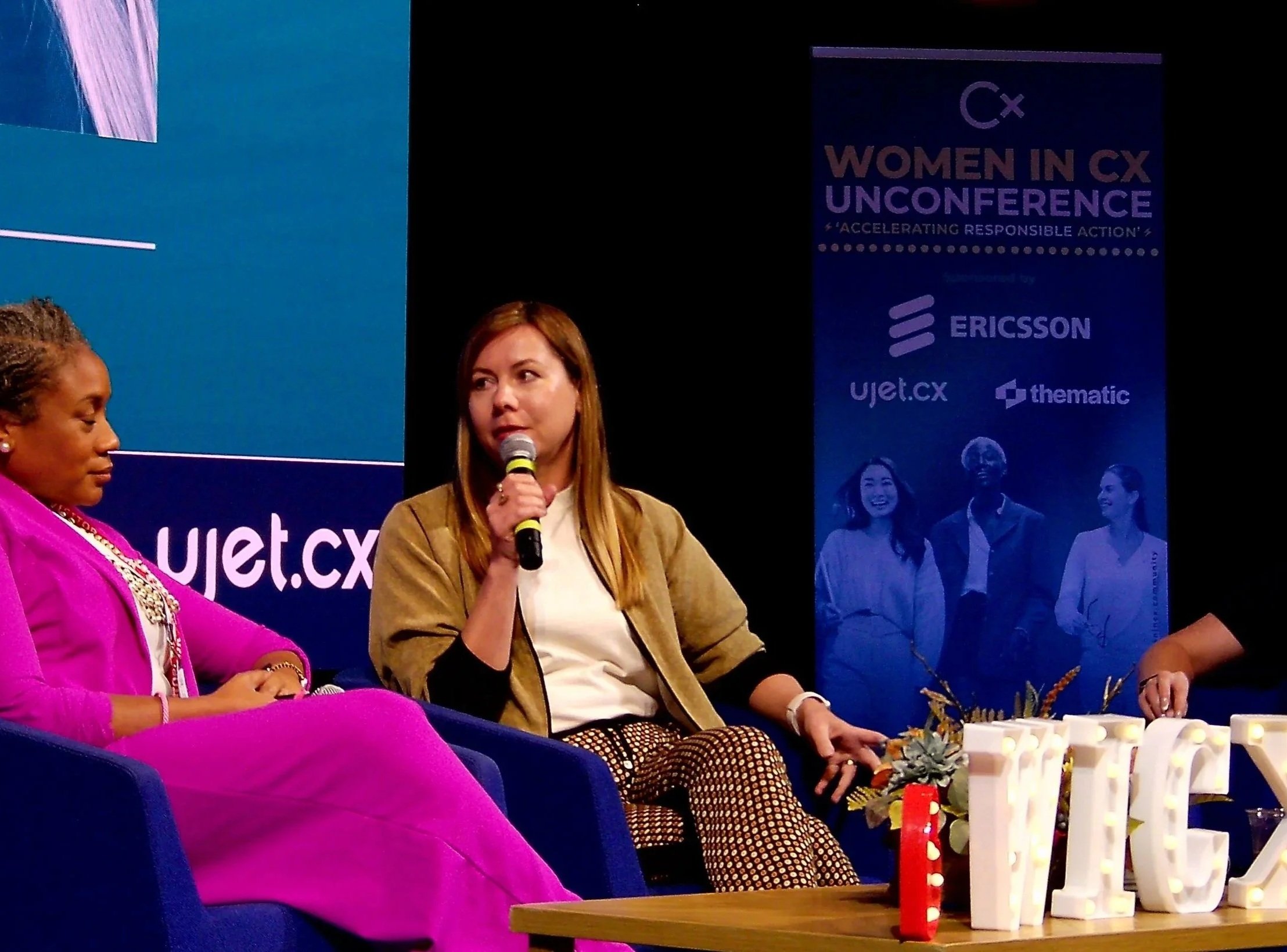
“Now with AI it's so easy to generate something that looks authoritative, but it isn't.” — Alyona Medelyan
Earning Priority: Who Else Needs This Problem Solved?
Even when leaders trust the evidence, they still have to decide what deserves attention.
Returning to her early experiences, Erika acknowledged something more personal about those presentations. She had invested so much in identifying the problems that she saw the meeting as her moment to shine.
“In that moment I should have been focused on making everyone else the hero and why they should own the problem.”
That reflection gets to a difficult part of CX leadership. We can become highly skilled at explaining what is wrong while giving colleagues too little reason to change their own plans.
Erika described how her team made the consequences relevant to the wider organisation. Customer stories helped secure attention. The next step was to show what the experience was costing: additional contact centre demand and expensive personal service compensating for broken systems.
The business was already paying for those problems. Making that cost visible changed the discussion about whether it could afford to address them.
Erika spoke about bringing functions together to prioritise the work and involving technology colleagues in sequencing delivery. In the organisation’s annual planning, customer experience had become one of four goals.
Stephanie faced the additional challenge of building commitment across a decentralised global business. Her approach involved developing evidence in individual markets that connected customer improvements with outcomes such as retention and growth, then helping other country teams learn from those experiences.
“There's a lot more engagement and buy-in when the countries are connecting to other country teams.”
A recommendation from a global function can feel distant from local pressures. Seeing colleagues work through a recognisable problem gives it a different kind of credibility. Stephanie was clear that building this momentum remained an ongoing task.
I shared an approach from my own experience: looking for where a customer problem could contribute to an objective that already had investment behind it. Improving onboarding might help sales deliver its growth ambitions. An existing transformation programme might provide the opportunity to remove a recurring source of customer effort.
Those connections require us to understand the business well enough to make a specific case. They also require honesty about what happens if the problem remains unresolved.
As Alyona urged:
“Look at revenue at risk of not acting.”
That question makes delay part of the decision. The cost continues to accumulate while the problem waits for a place on the agenda.
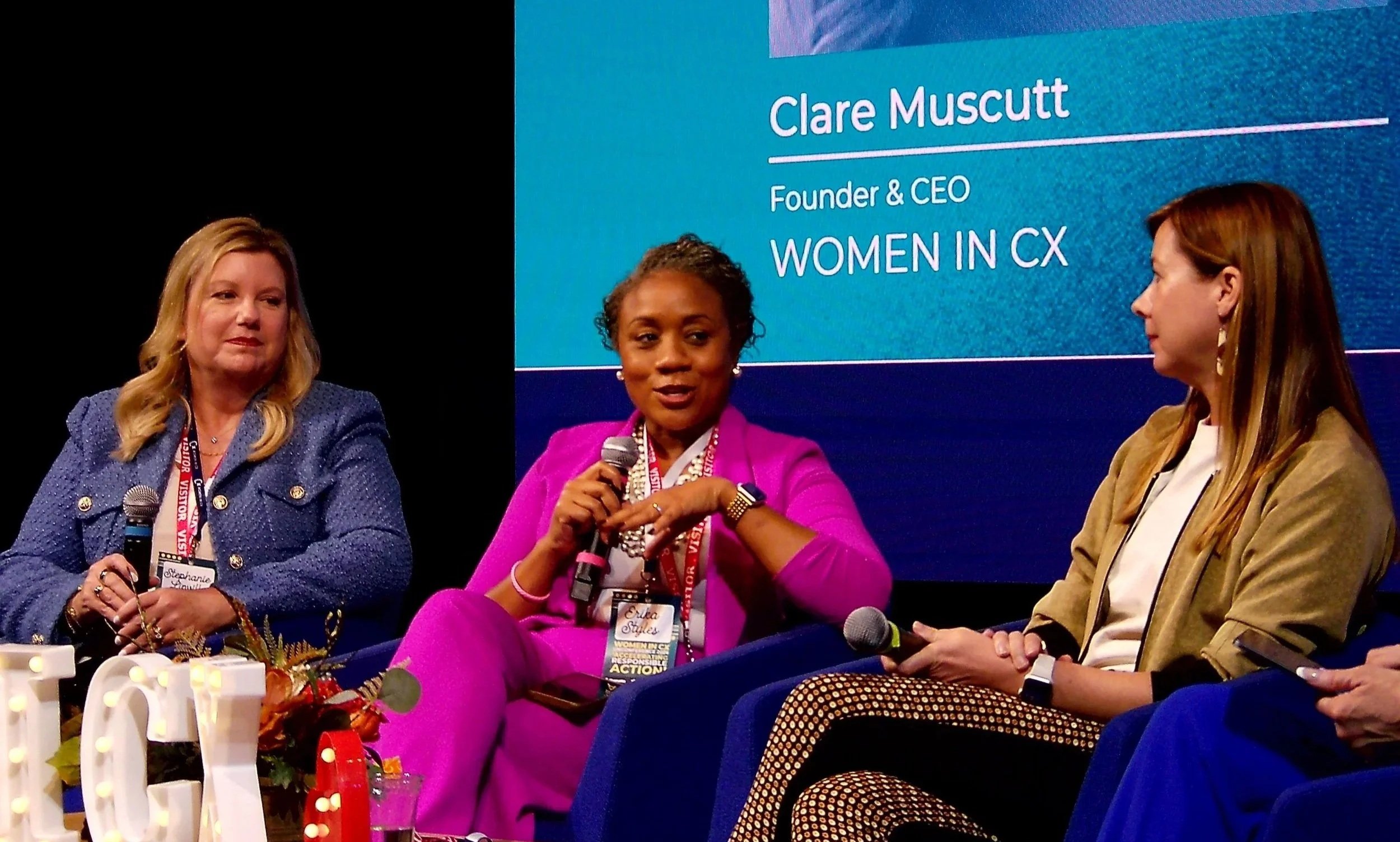
“In that moment, I should have been focused on making everyone else the hero and why they should own the problem.” — Erika Styles
Owning the Outcome: What Happens After Everyone Agrees?
There is still another point at which progress can disappear. The organisation agrees to act, but delivery passes to teams with different objectives, pressures and ideas about what success means.
Stephanie described the reality of her global role:
“I simply cannot be the one to do the work. It has to be the teams that are working with the customers.”
That makes ownership something CX leaders have to build into the work from the beginning. Stephanie spoke about engaging colleagues along the way so they have a stake in the findings. Erika emphasised shared organisational goals and involving the people who hold the relevant decision rights.
Her advice was direct:
“Find the individual that owns the no.”
It is a useful question when a problem crosses functions and each team can explain why it cannot move. Who actually has the authority to decide?
During the discussion, I added a question I have used when a customer priority is rejected:
“Who's going to be the owner of the consequences of that decision?”
That can reopen a conversation because it makes responsibility explicit. A decision to defer an improvement leaves customers experiencing the problem and colleagues managing its effects. If it later resurfaces as a brand issue or further service demand, the organisation should be able to explain the choice it made.
Accountability also needs to survive an approval. Stephanie challenged the habit of reporting activity as progress:
“We want to focus on those measures and what's actually happening to the customer experience, not what the team is doing to improve the customer experience.”
Alyona offered an example of that distinction in practice. A digital bank connected evidence across channels and identified a problem affecting mortgage applications: only one partner’s financial information was being considered. She reported that linking the accounts led to a 69% reduction in calls about that issue.
The team could point to a specific change and an observed result. That helped it earn trust for subsequent recommendations, bringing the conversation back to where it began: confidence in customer evidence grows when people can see what acting on it achieves.

“We want to focus on those measures and what's actually happening to the customer experience, not what the team is doing to improve the customer experience.” — Stephanie Linville
Final Thought: What Should Count as Progress?
Erika’s opening story stays with me because the meeting appeared to be a success. The insight had been understood. The problem had been acknowledged. Everything that happened afterwards exposed how much remained undecided.
The experiences shared in Dallas ask us to be more demanding about what we count as progress. Has the evidence changed a priority? Has someone with authority accepted responsibility? Do the teams doing the work share an understanding of the intended outcome? Will anyone return to check what changed for customers?
They also raise a question about responsibility itself. Commercial evidence helps secure action, but some customer consequences are harder to quantify. Our judgement still matters when the financial case is incomplete, particularly for people whose experiences are less visible in the data.
The women on this panel showed what that leadership looks like in practice: questioning analysis, understanding colleagues’ pressures, building shared commitment and following decisions through to their consequences.
That is the work behind Accelerating Responsible Action. The next time a room agrees that a customer problem matters, we need to leave knowing what that agreement will change — and who will see it through.
Continue the Conversation at UnConference 2027
Women in CX UnConferences have brought women together in Berlin, Miami, London, and Dallas to examine the decisions shaping the future of customer experience and turn those conversations into practical, community-authored work.
We are already thinking about what comes next.
If you are a woman working across customer experience, insight, design, operations, transformation, technology or AI, join the list to be the first to hear about the Women in CX UnConference 2027.
Register your interest for the Women in CX UnConference 2027.